.png?width=1280&height=720&name=Untitled%20design%20(22).png "Untitled design (22)")

Back pain is one of the most common complaints we see in Easley SC. Many adults assume it is simply part of aging or the result of sitting too much.
While lifestyle plays a role, back pain is rarely random and it is rarely inevitable.
Why Back Pain Keeps Returning
Most recurring back pain follows a predictable pattern.
An episode occurs after lifting, yard work, or a long drive. Symptoms improve with rest or medication. Activity resumes. Weeks or months later, the pain returns.
The underlying contributors were never addressed.
Common drivers of persistent back pain include:
- Poor load tolerance
- Weakness in the hips and posterior chain
- Limited thoracic mobility
- Fear of movement after a painful episode
- Deconditioning from avoiding activity
Pain leads to guarding. Guarding leads to stiffness. Stiffness leads to compensation. The cycle continues.
Imaging Is Not the Full Story
Many people with back pain undergo imaging that shows disc bulges or degeneration. These findings are common, even in people without pain.
What matters more is how your body moves and tolerates load.
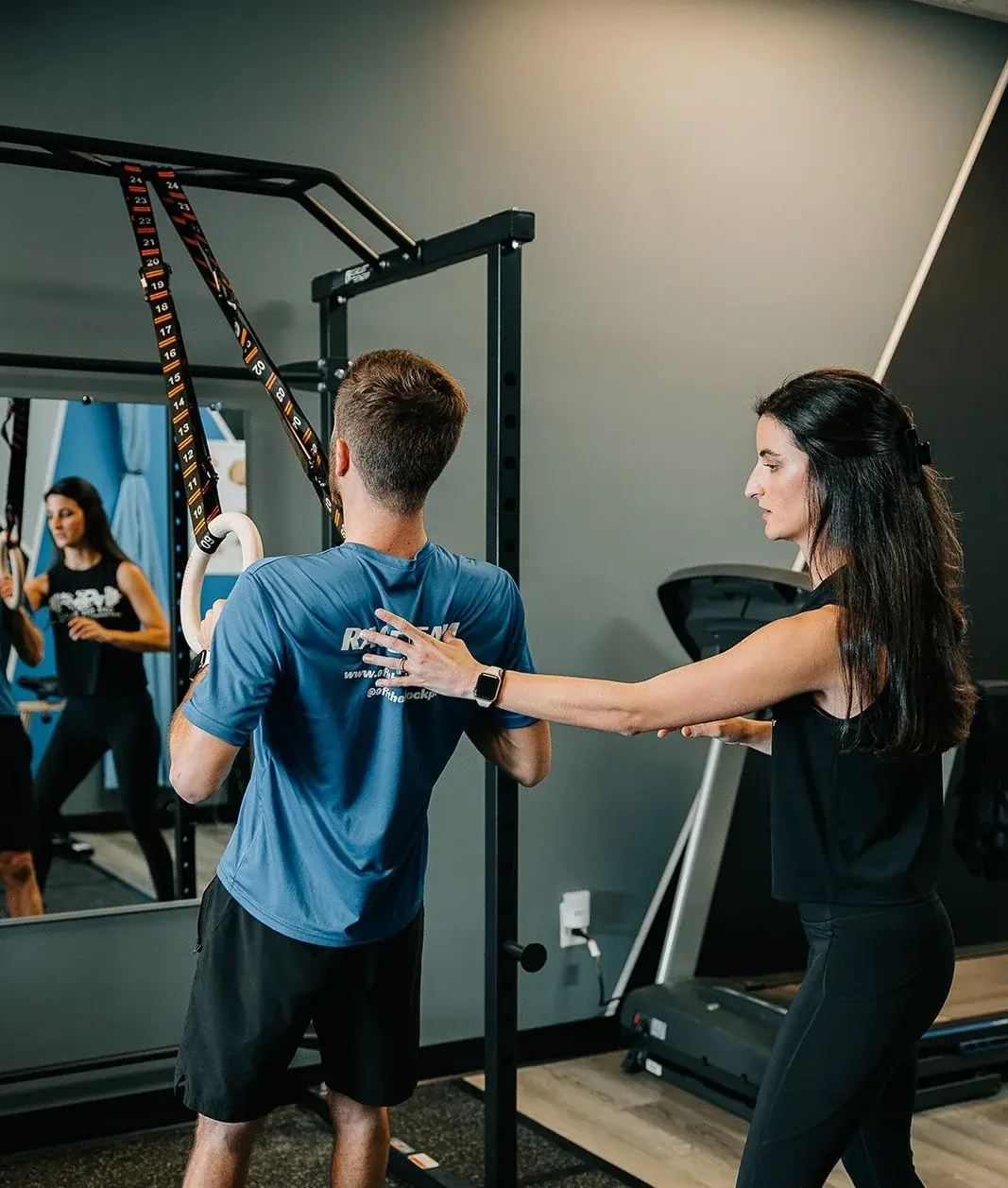
At our physical therapy clinic in Easley SC, we assess:
- Squat mechanics
- Hinge patterns
- Core stability under load
- Hip mobility
- Symmetry during movement
This tells us far more about your back than an image alone.
Strength Is Often the Missing Link
Avoiding movement may feel protective in the short term, but long term avoidance reduces capacity.
The spine is designed to move and tolerate load when supported by strong surrounding musculature.
A structured strength progression can:
- Improve tissue tolerance
- Reduce fear associated with movement
- Restore confidence
- Prevent future flare ups
In a cash based model, we have the time to build progressive programming instead of rushing through generic exercise sheets.
When to Seek Help
If your back pain:
- Limits your workouts
- Interrupts sleep
- Returns repeatedly
- Causes you to avoid certain movements
It is time for a comprehensive assessment.
Back pain in Easley SC does not have to be accepted as normal. With proper evaluation and structured progression, most people can return to full activity with less fear and greater resilience.