.png?width=1280&height=720&name=Untitled%20design%20(22).png "Untitled design (22)")
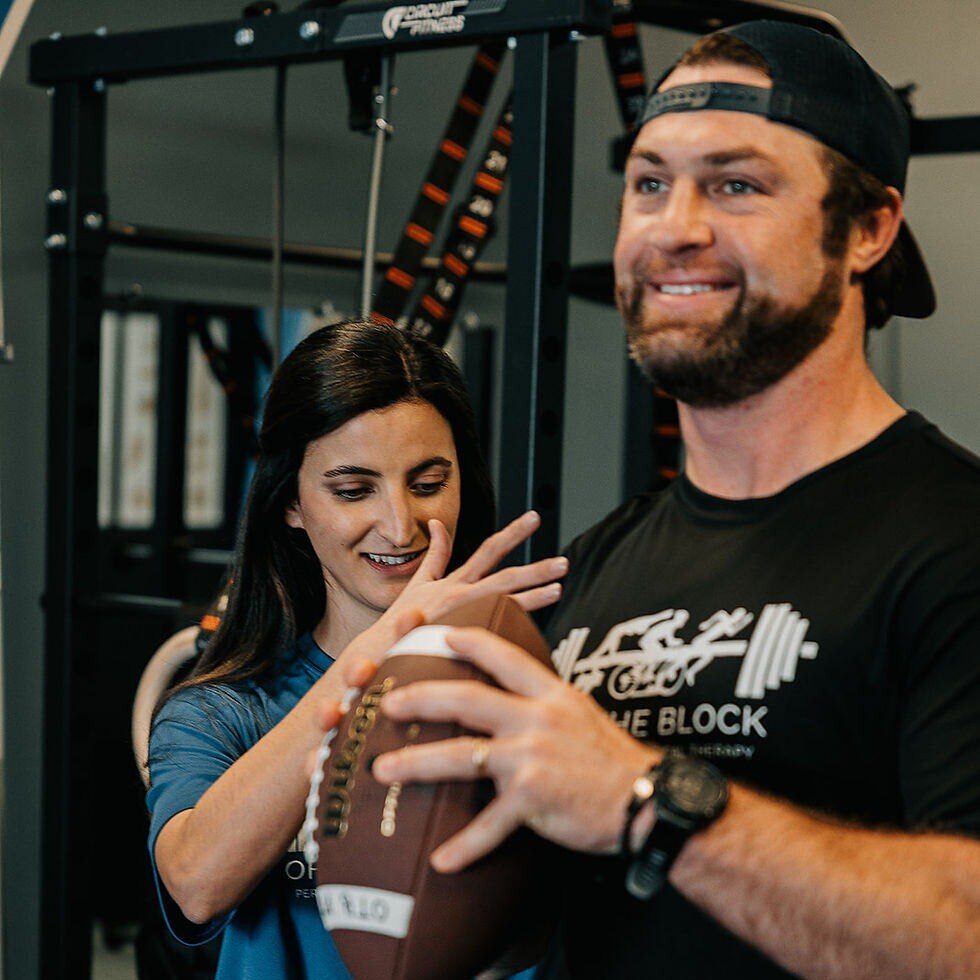

Football season in Upstate South Carolina is one of the busiest times of year for sports injuries.
Every week, athletes throughout Central, Clemson, Seneca, Easley, Pendleton, Liberty, Pickens, Anderson, and surrounding communities are dealing with the physical demands that come with practices, games, lifting, conditioning, and repetitive contact. At Off The Block Performance Physical Therapy, we work with middle school and high school football athletes trying to recover from injuries while safely returning to the field as quickly and confidently as possible. One of the biggest problems we see is athletes trying to push through injuries for too long before getting them addressed.
What starts as:
- mild soreness
- a rolled ankle
- shoulder tightness
- knee pain
- hamstring tightness
can quickly turn into missed games, reduced performance, or longer recovery timelines if ignored.
Football Places Huge Demands on the Body
Football combines:
- sprinting
- cutting
- jumping
- contact
- rapid acceleration
- deceleration
- rotational forces
all within a highly fatigued environment.
That combination creates stress on:
- joints
- muscles
- tendons
- ligaments
- nervous system recovery
Even athletes who are strong and well conditioned can still become overloaded during the season.
Ankle Sprains Are Extremely Common
One of the most common injuries we see in football players is ankle sprains.
These often happen during:
- cutting
- awkward landings
- tackles
- contact around the pile
- sudden direction changes
The issue is that many athletes return too quickly without fully rebuilding:
- stability
- balance
- force absorption
- confidence
This is why recurring ankle sprains are so common.
At Off The Block Performance PT, rehab focuses on more than just reducing swelling. We work on helping athletes regain the strength and movement control needed to confidently return to sport.
Shoulder Injuries Can Linger All Season
Football athletes place heavy stress on the shoulders during:
- blocking
- tackling
- falling
- overhead lifting
- contact drills
Players often deal with:
- shoulder instability
- AC joint irritation
- rotator cuff pain
- stingers
- mobility limitations
A lot of athletes simply tape the shoulder and continue playing, but unresolved weakness and instability can continue affecting performance throughout the season.
Knee Injuries Are Always a Concern
Football athletes place large forces through the knees during:
- cutting
- planting
- deceleration
- contact
We commonly see:
- MCL sprains
- patellar tendon pain
- meniscus irritation
- ACL injuries
- quad strains
Not all knee pain means something major is torn, but persistent pain, swelling, instability, or reduced confidence should be evaluated early.
Hamstring Strains Often Happen Late in Games
Hamstring injuries frequently occur when fatigue builds up.
Athletes may notice:
- tightness during sprinting
- pulling sensations
- reduced explosiveness
- recurring strains
Hamstring injuries are frustrating because athletes often return before fully rebuilding sprint capacity and force production.
Proper rehab should include progressive:
- sprinting
- loading
- strength work
- deceleration training
- return to play progression
Recovery During the Season Matters
Many football athletes underestimate how much recovery impacts injury risk.
During the season, players are balancing:
- games
- practices
- lifting
- school
- poor sleep
- stress
Without adequate recovery, tissues become harder to keep up with the demands being placed on them.
Simple factors like:
- sleep
- hydration
- nutrition
- mobility
- recovery sessions
can make a major difference over the course of a season.
Playing Through Pain Is Not Always Smart
Football culture often encourages athletes to ignore pain.
While toughness is part of the sport, there is a difference between:
- normal soreness
and - injuries that continue worsening
Pain that:
- changes movement
- limits speed
- reduces confidence
- worsens progressively
- lingers after activity
should not simply be ignored.
Early intervention often prevents much larger setbacks later in the season.
What Football Rehab Should Actually Include
Good football rehab should eventually progress beyond basic exercises.
Athletes need to rebuild:
- speed
- power
- strength
- stability
- force production
- confidence
- sport specific movement
At Off The Block Performance Physical Therapy, we help athletes bridge the gap between rehab and performance so they can return to football feeling prepared instead of hesitant.
Why Athletes in Upstate SC Choose Off The Block
Football athletes throughout Central, Clemson, Easley, Seneca, Pendleton, Anderson, and surrounding areas often choose Off The Block because they want:
- one on one treatment
- individualized rehab
- performance focused progression
- providers who understand athletes
- active rehab sessions
- return to sport preparation
Our goal is helping athletes safely return to competition while building long term resilience along the way. We see rec league, high school, college and professional football players year round!
FAQs
Should football players play through pain?
Not always. Persistent or worsening pain should be evaluated before it becomes a larger injury.
How long does an ankle sprain take to recover?
Recovery timelines vary depending on severity, but returning too early increases reinjury risk.
Can PT help prevent football injuries?
Yes. Strength, mobility, stability, and movement training can help reduce injury risk.
What should rehab focus on for football players?
Rehab should eventually include speed, power, stability, and sport specific progression.
Sources
- American Journal of Sports Medicine
- National Athletic Trainers’ Association
- Journal of Strength and Conditioning Research
- National Institutes of Health